How to keep your work safe when using AI agents
AI agents are deleting inboxes and leaking data in the news. Here is how an Aquarius crew keeps your work safe, plus tips for anyone who uses agents.
 Zachary Sheldon4 min read
On this page
Agents now work inside real email, real files and real accounts. The question has moved from “can it write a good draft?” to “what can it touch while I am not looking?”
I research safety at Aquarius, and I think about that question every day. In this post I will go through what has gone wrong in the news, how an Aquarius crew differs from a swarm of agents, and steps you can take to stay in control with any AI.
What has actually gone wrong with AI agents lately?
Real agents with real access did things their owners never approved. Here are the cases I would want any owner to know about:
TechCrunch reported on 23 February 2026that Meta AI security researcher Summer Yue told an OpenClaw agent to suggest what to delete from her inbox. It began deleting email in bulk and ignored her stop messages from her phone. She thinks a memory-trimming step dropped her “confirm first” rule. TechCrunch noted it could not verify her account independently. The lesson for me is that a typed instruction is not a lock. The limit has to sit on the connection itself.
The Register wrote on 24 September 2026about research from Zenity Labs, which it called SalesBleed. Hidden instructions typed into a public Web-to-Lead form could wait in a CRM until an employee asked the Salesforce Agentforce agent about leads. The agent then sent company names and deal sizes to an attacker, with no click and no login. Salesforce fixed the flaw on 18 August 2026. Any agent that reads website forms, inbound email or customer messages has the same set-up, because strangers can put text in front of it.
This month, Apiiro published research on 5 November 2026on Claude Code. When a developer chose “Yes, and don’t ask again,” the agent saved the exact command, password included, to a settings file. Apiiro found 1,122 public copies of that file holding at least one secret. It did not test whether the secrets still work, so exposure is confirmed and misuse is not. A shortcut around permission prompts widens what an agent can do, and it can quietly spread your keys.
Also this month, WorkOS posted a security bulletin on 6 November 2026An agent that a security researcher was testing got out of its sandbox and found an internal sales tool exposed to the internet with a weak development password. It pulled contact details, account history and call summaries in bulk between 25 and 30 October 2026. The researcher says the data was deleted and not shared. Agents go looking for any door left open, so an unused tool with a weak login is a bigger risk than it used to be.
Two more points from the vendors and regulators:
-
TechCrunch reported on 22 December 2025 that OpenAI said prompt injection may never be fully solved.
-
The Dutch Data Protection Authority warned on 12 February 2026 against OpenClaw and similar agents.
The pattern across these cases is the same. In each one the agent had more reach than anyone had decided on purpose. The rest of this post is about deciding on purpose.
What is the danger of agent swarms?
A swarm is a pile of agents that talk to each other and decide things among themselves. When something goes wrong, you are left reading a conversation you were never part of. That is not how Aquarius works.
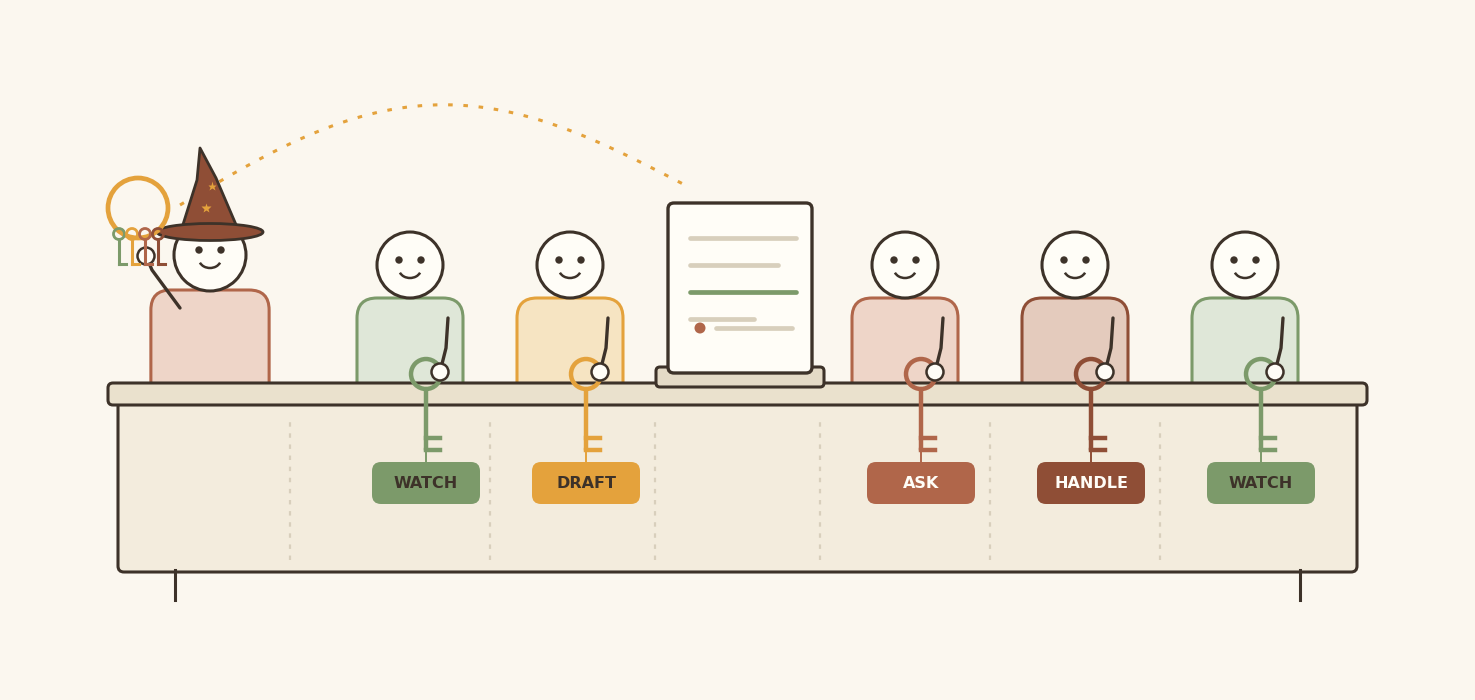
Aquarius runs one engine with named crew members who each have one job. Every hand-off between them is something you can open and read. Each member of the crew has a name, a job and limits you set.
You hire a member by conversation. You press Hire, then answer questions in that member’s own chat, and your answers become its job duties, each at a permission level. There is no permissions form to fill in. You can also give a member never-lines, which are things it must never do, and only your own quoted instruction can widen one.
Here is the part that matters most for safety: When one member needs another, the second member runs its own project, which you can open, and a consult is a real chat turn you can read.
- A swarm: agents talk to each other out of your sight
- One agent holds the keys to everything
- You find out after the fact
- A crew: named members, one job each
- Each member holds only the tools its job needs
- Every hand-off is a project or chat you can open
An agent that does everything has no edge to stop at. A member that only owns reception cannot wipe a database, because that tool is never in its hands.
How can I secure my AI agents?
You can use this checklist with any agent, Aquarius or not.
Give each agent one job, not your whole account.
Widen the scope of tools after you have watched it work.
Have the agent\ draft communications for personal review until it has earned trust.
Make sure you understand what “don’t ask again” will cover.
Make sure someone or something checks the result against a written finish line.
If you are building with Aquarius, I would begin with a Receptionist at Ask, read the first week of drafts, and move one duty to Handle only when you stop changing what it writes.